
Anyone who has brewed beer more than once knows this moment well:
The boil is finished, the wort is hot — and what happens next will largely determine the quality of the final beer.
Cooling the wort quickly after boiling is not just a convenience.
It’s a critical control point in the brewing process, affecting clarity, flavor stability, and microbial safety. This is where a wort chiller becomes an essential piece of equipment.
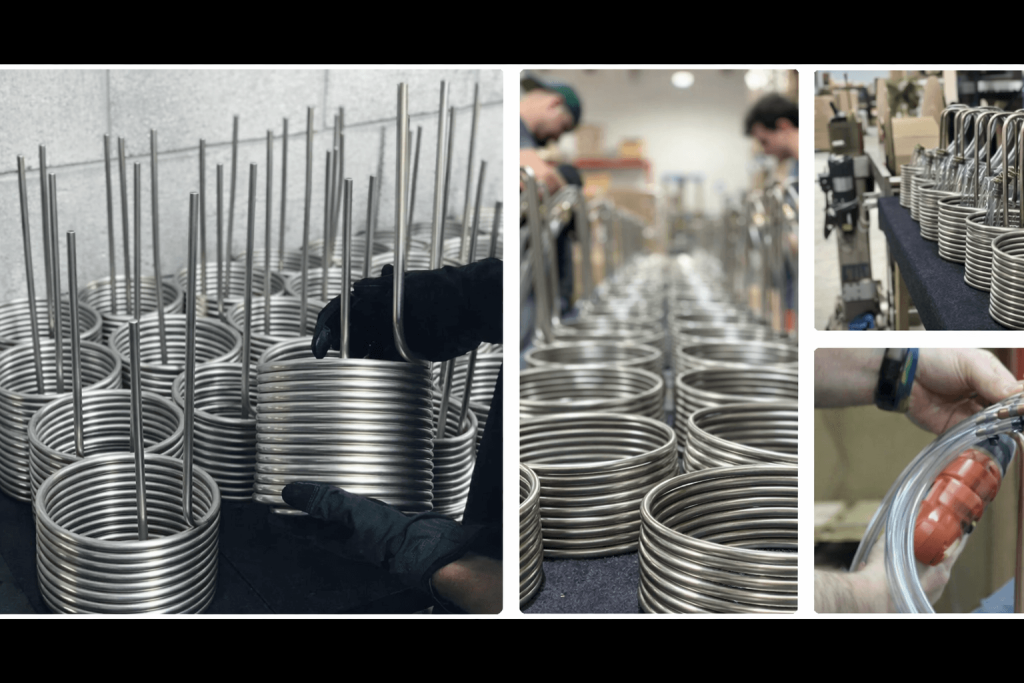
A wort chiller is designed to remove heat from freshly boiled wort rapidly, bringing it down to yeast-pitching temperature far faster than passive cooling methods like ice baths. By circulating cold water through a coiled stainless steel tube, heat is efficiently transferred away from the wort and safely discharged.
Fast cooling isn’t optional — it’s foundational to good beer.
Why Rapid Wort Cooling Matters
Once the boil ends, the wort enters a vulnerable phase.
Slow cooling can lead to:
- Increased exposure to airborne and surface bacteria
- Formation of off-flavors such as DMS (often described as corn or cabbage-like)
- Poor protein precipitation, resulting in hazy beer
- Longer brew days and delayed fermentation
In contrast, efficient chilling delivers clear advantages:
- Wort exits the microbial “danger zone” quickly
- A strong cold break forms as proteins and tannins precipitate
- Cleaner fermentation and improved flavor definition
- Yeast can be pitched sooner under optimal conditions
For many brewers, installing a wort chiller is the single upgrade that most dramatically improves consistency.

The Two Most Common Wort Chiller Designs
1. Immersion Wort Chillers (Stainless Steel Coil Design)
Immersion chillers are widely used, especially among homebrewers and small-batch systems.
The design is straightforward: a long stainless steel coil is placed directly into the kettle, with cold water flowing inside the tubing while hot wort surrounds it.
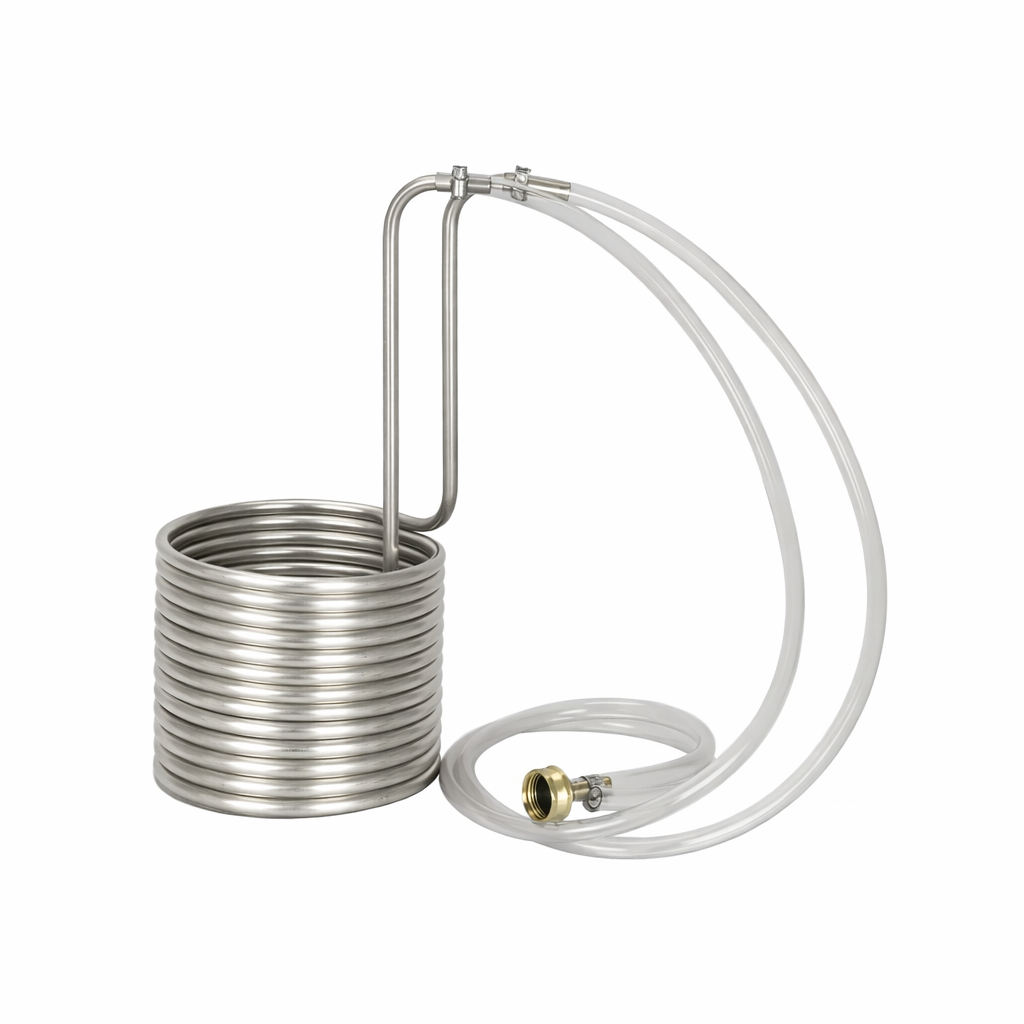
Typical use process:
- Insert the chiller during the final 10–15 minutes of the boil to sanitize
- Connect the inlet to a water source
- After flameout, start water flow
- Gently stir the wort to improve heat exchange
- Transfer once the pitching temperature is reached
Key benefits include:
- Simple operation with no pump required
- In-place sanitation during boiling
- Minimal handling of hot wort
- Durable and corrosion-resistant construction
From a manufacturing standpoint, stainless steel immersion coils are well suited to custom stainless steel coil tubing production, where coil diameter, wall thickness, and length can be adjusted for different kettle sizes.
2. Counterflow Wort Chillers (Tube-in-Tube Construction)
Counterflow chillers operate on a different principle.
Hot wort flows through an inner stainless steel tube, while cold water moves in the opposite direction through an outer channel. This counter-directional flow maintains a consistent temperature gradient, enabling very efficient heat transfer.
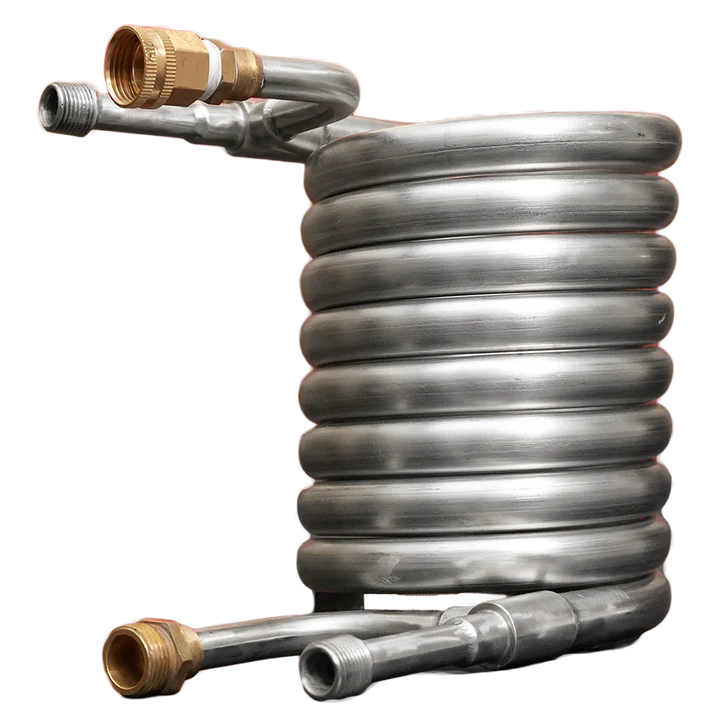
Advantages include:
- Extremely fast cooling, often in a single pass
- Reduced water consumption compared to immersion designs
- Excellent performance for higher-volume or automated systems
These chillers are commonly integrated into RIMS or HERMS brewing setups.
Because wort travels inside the tubing, proper cleaning and sanitation after each use is essential — but for many brewers, the speed and efficiency outweigh the added maintenance.
Why More Brewers Are Choosing Stainless Steel
Copper has traditionally been used for wort chillers, but stainless steel tubing is increasingly preferred in modern brewing systems.
Key reasons include:
- Superior corrosion resistance
- Long service life with minimal surface degradation
- Smooth internal surfaces that support effective cleaning
- Compatibility with food and beverage standards
- Visual and material consistency with stainless brewing equipment
For equipment manufacturers and OEMs, stainless steel allows precise control over OD, wall thickness, and coil geometry, making it ideal for both immersion and counterflow chiller designs.
Stainless Steel Coil Tubing for Brewing Applications
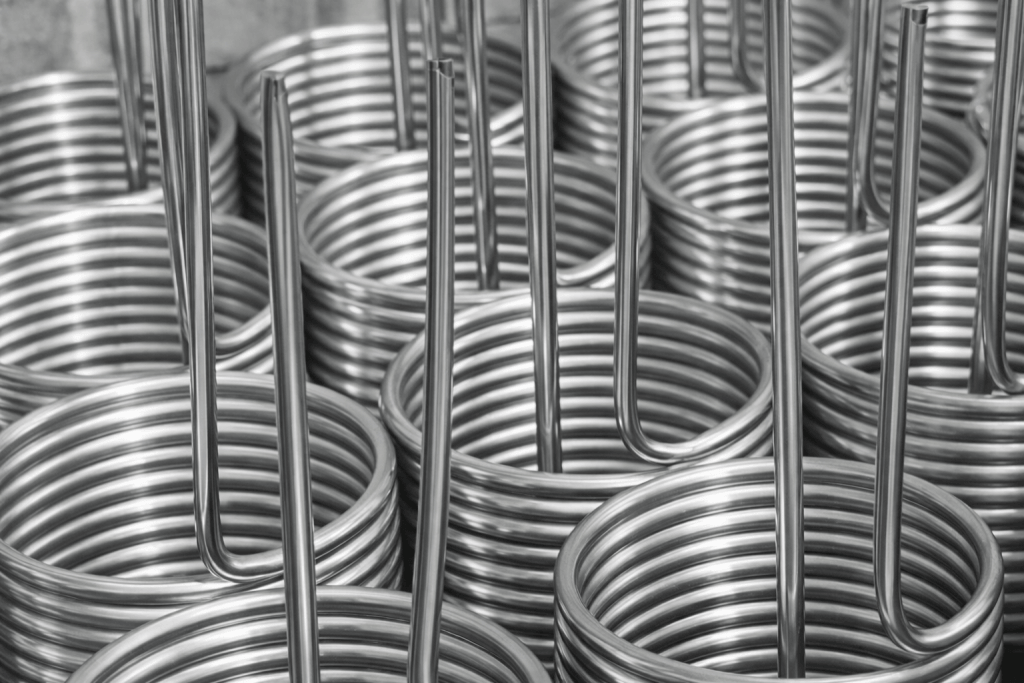
At JW STEEL, we produce stainless steel coil tubing and bright annealed tubing used in:
- Wort chillers
- Heat exchange systems
- Beverage dispensing and cooling
- Brewing and fermentation equipment
Our tubing can be supplied in custom lengths and coil configurations to support prototyping, small-batch production, or scaled manufacturing.
Let’s Talk Brewing & Heat Transfer
If you’re involved in:
- Brewing equipment design
- Beverage system fabrication
- Heat transfer applications
- Stainless steel process tubing
We’re always open to technical discussions and collaboration.
Feel free to reach out if you need:
- Tubing specifications
- Sample lengths
- Custom coil solutions
- Support for a new chiller design
Happy brewing
★★★ Review of previously selected articles:
- What is Bright Annealing of Stainless Steel Tubes?
- What is the Difference Between Annealed and Bright Annealed Stainless Steel Tubes?
- AP, BA, and EP Stainless Steel Tubes: Key Differences and Application Scenarios
- What is the difference between a stainless steel pipe and a stainless steel tube?
- Common Applications of Stainless Steel Tubes
- Is Stainless Steel Tubing Good for Heat Exchangers?
- Exploring Stainless Steel Tubing: Making the Right Choice for Your Fluid System
- What is Stainless Steel Coil Tubing and Why It Matters in Modern Industry
- Choosing the Right Stuff: Corrosion-Resistant Materials
Get more information about us

Company Links
Contact Information
Ph: +86-21-62666697
Fax: +86-21-62999145
Mobi: +86 133 3793 7369
Email: link@jwgroup.cc
Add: No 2299, Xiangjiang Road, Shanghai, China