
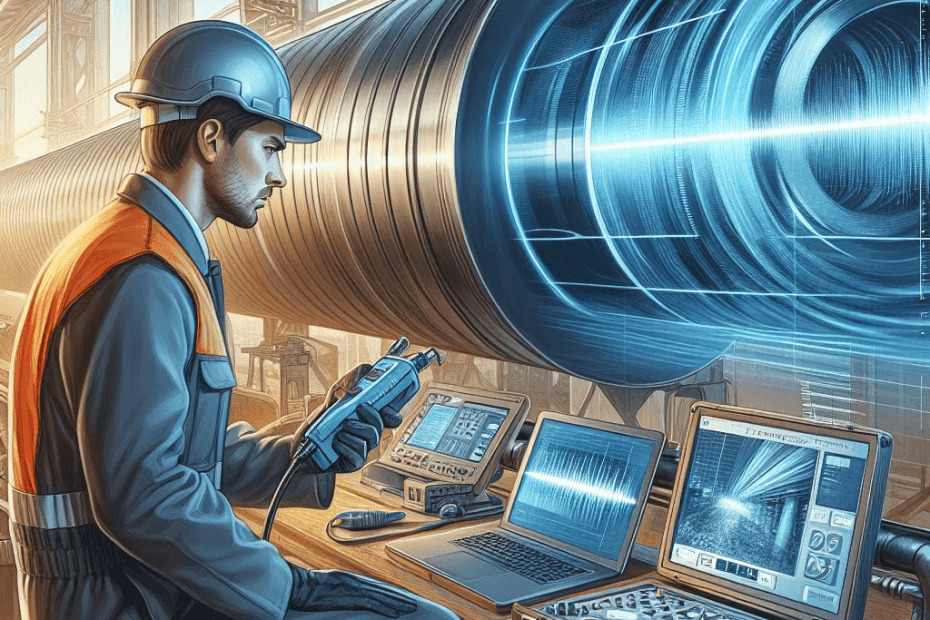
People often refer to Non-Destructive Inspection (NDI) and Non-Destructive Testing (NDT) as the same thing. NDI is the previous term, but the new term, NDT, is more appropriate. Nowadays, many foreign countries use NDE (Non-Destructive Evaluation) instead.
Definition: Crack detection refers to the detection of cracks or defects inside metal materials or components. Common inspection methods include X-ray inspection, ultrasonic inspection, magnetic particle inspection, eddy current inspection, gamma ray inspection, and penetrant inspection (fluorescent inspection, dye inspection), among other physical inspection methods. Physical inspection refers to non-destructive inspection conducted without causing chemical changes.
Inspection Scope:
- Surface defect inspection of welds: inspect weld surface cracks, incomplete penetration, and leaks to ensure welding quality.
- Internal cavity inspection: inspect surface cracks, delamination, wire drawing, scratches, pits, protrusions, spots, corrosion, and other defects.
- Status inspection: conduct internal inspection according to technical requirements after certain products (such as worm gear pumps, engines, etc.) have operated.
- Assembly inspection: use the Yatai optoelectronic industrial video endoscope to inspect assembly quality when required; after assembly or completion of a certain process, inspect whether the assembly positions of various components meet the requirements of drawings or technical conditions and whether there are assembly defects.
- Debris inspection: inspect internal debris, foreign objects, and other excess materials in products.
Non-Destructive Testing (NDT): Concept: Non-destructive inspection is a testing method that checks the surface and internal quality of the inspected parts without damaging the workpiece or raw materials. Methods: Common NDT methods include X-ray inspection, ultrasonic inspection, magnetic particle inspection, penetrant inspection, eddy current inspection, gamma ray inspection, fluorescent inspection, dye inspection, and other methods. Purpose: Through detecting internal defects of products, the following improvements can be made:
- Improve manufacturing processes;
- Reduce manufacturing costs;
- Improve product reliability;
- Ensure the safe operation of equipment.
Principle: Non-destructive testing relies on the acoustic, optical, magnetic, and electrical properties of materials to detect defects or inhomogeneities in the inspected objects without damaging or affecting their performance. It provides information on the size, location, nature, and quantity of defects. Compared to destructive testing, NDT has the following characteristics. First, it is non-destructive, as it does not damage the performance of the inspected object during testing. Second, it is comprehensive, as non-destructive testing can be performed on the entire inspected object when necessary, which is not feasible with destructive testing. Third, it is continuous, as destructive testing generally only applies to the inspection of raw materials, such as tensile, compression, and bending tests commonly used in mechanical engineering, which are conducted on raw materials for manufacturing purposes. For finished products and in-service products, destructive testing cannot be performed unless they are not intended to continue in service, whereas non-destructive testing does not damage the performance of the inspected object, allowing for comprehensive inspection of raw materials, intermediate process steps, and final products, as well as in-service equipment.
Classification of NDT Testing: Depending on different physical principles or the objects and purposes of testing, non-destructive testing can be roughly divided into the following methods:
a) Penetrant testing (PT);
b) Magnetic testing (MT);
c) Visual testing (VT);
d) Ultrasonic testing (UT);
e) Eddy current testing (ET);
f) Radiographic testing (RT);
g) Leak testing (LT);
h) Infrared thermographic testing (TT or IT);
i) Acoustic emission testing (AT or AE).
★★★ Review of previously selected articles:
- What is Bright Annealing of Stainless Steel Tubes?
- What is the Difference Between Annealed and Bright Annealed Stainless Steel Tubes?
- AP, BA, and EP Stainless Steel Tubes: Key Differences and Application Scenarios
- What is the difference between a stainless steel pipe and a stainless steel tube?
- Common Applications of Stainless Steel Tubes
- Is Stainless Steel Tubing Good for Heat Exchangers?
- Exploring Stainless Steel Tubing: Making the Right Choice for Your Fluid System
- What is Stainless Steel Coil Tubing and Why It Matters in Modern Industry
- Choosing the Right Stuff: Corrosion-Resistant Materials
Get more information about us

Company Links
Contact Information
Ph: +86-21-62666697
Fax: +86-21-62999145
Mobi: +86 133 3793 7369
Email: link@jwgroup.cc
Add: No 2299, Xiangjiang Road, Shanghai, China