
“Stainless steel tube” and “stainless steel pipe” are sometimes used interchangeably in everyday conversations, but they have distinct differences in industrial and engineering applications. Here’s a detailed comparison:
1. Different Applications
- Stainless Steel Tube
- Commonly used in structural, precision equipment, medical, automotive, and aerospace industries.
- Designed for applications requiring high precision, strength, and corrosion resistance.
- Examples: heat exchanger tubes, instrument tubing, medical needles.
- Stainless Steel Pipe
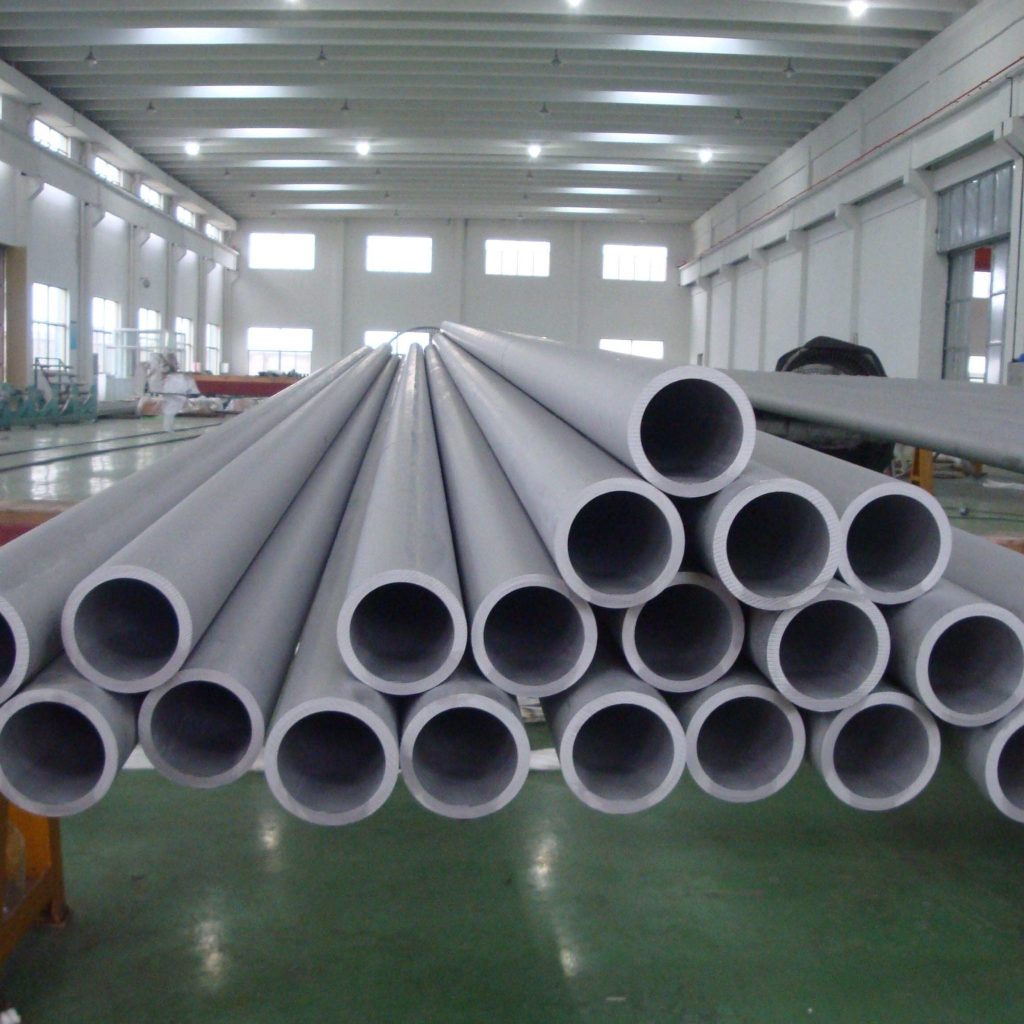
- Primarily used for transporting fluids such as water, gas, oil, and chemicals.
- Found in industries like construction, petroleum, natural gas, chemical processing, and food production.
- Examples: water supply pipes, oil pipelines, chemical transport pipes.
2. Different Sizing Standards
- Pipe is measured by inside diameter (ID) and wall thickness (Schedule, SCH) since its main function is fluid transport, and flow capacity depends on the inner diameter. Common standards include:
- ASTM A312 (seamless and welded stainless steel pipes)
- ASME B36.19 (standard dimensions for stainless steel pipes)
- Tube is measured by outside diameter (OD) and wall thickness (usually in mm or inches) because it is often used for structural or precision purposes. Common standards include:
- ASTM A269 (stainless steel tubing for instrumentation and heat exchangers)
- ASTM A554 (stainless steel decorative tubes)
3. Different Manufacturing Tolerances
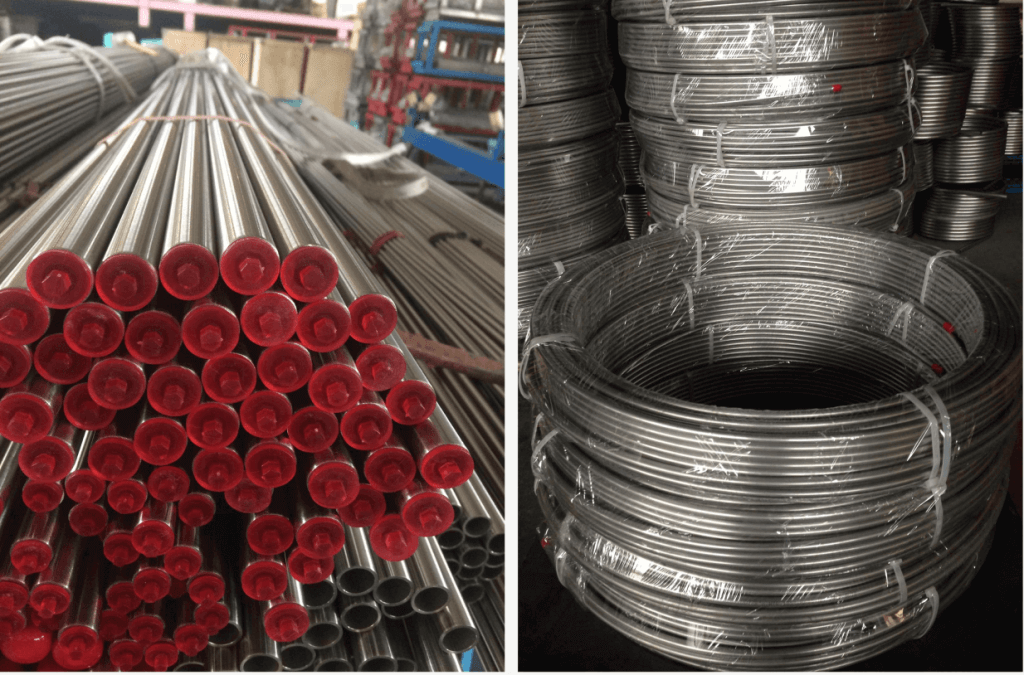
- Tube has stricter dimensional tolerances and higher precision.
- Pipe has looser tolerances since the focus is on transport capacity and pressure resistance rather than precise dimensions.
4. Different Surface Finishes
- Tube generally requires a smoother surface finish, such as polishing, pickling, or mirror finishing, for precision applications.
- Pipe usually has a simpler finish, such as pickling or black oxidation. Some industrial pipes may be polished as well.
Summary
| Feature | Stainless Steel Tube | Stainless Steel Pipe |
| Primary Use | Structural, precision equipment, medical, aerospace | Fluid transport (water, oil, gas, chemicals) |
| Sizing Standard | Measured by OD and wall thickness | Measured by ID and schedule (SCH) |
| Manufacturing Tolerance | Higher precision, tighter tolerance | Lower precision, wider tolerance |
| Surface Finish | Polished, pickled, mirror finish | Pickled, oxidized, some polished |
| Common Standards | ASTM A269, A554 | ASTM A312, ASME B36.19 |
If you’re in sales or procurement, it’s essential to clarify customer requirements based on these differences to avoid misunderstandings.
★★★ Review of previously selected articles:
- What is Bright Annealing of Stainless Steel Tubes?
- What is the Difference Between Annealed and Bright Annealed Stainless Steel Tubes?
- AP, BA, and EP Stainless Steel Tubes: Key Differences and Application Scenarios
- What is the difference between a stainless steel pipe and a stainless steel tube?
- Common Applications of Stainless Steel Tubes
- Is Stainless Steel Tubing Good for Heat Exchangers?
- Exploring Stainless Steel Tubing: Making the Right Choice for Your Fluid System
- What is Stainless Steel Coil Tubing and Why It Matters in Modern Industry
- Choosing the Right Stuff: Corrosion-Resistant Materials
Get more information about us

Company Links
Contact Information
Ph: +86-21-62666697
Fax: +86-21-62999145
Mobi: +86 133 3793 7369
Email: link@jwgroup.cc
Add: No 2299, Xiangjiang Road, Shanghai, China