
1. What is Bright Annealing of Stainless Steel Tubes?
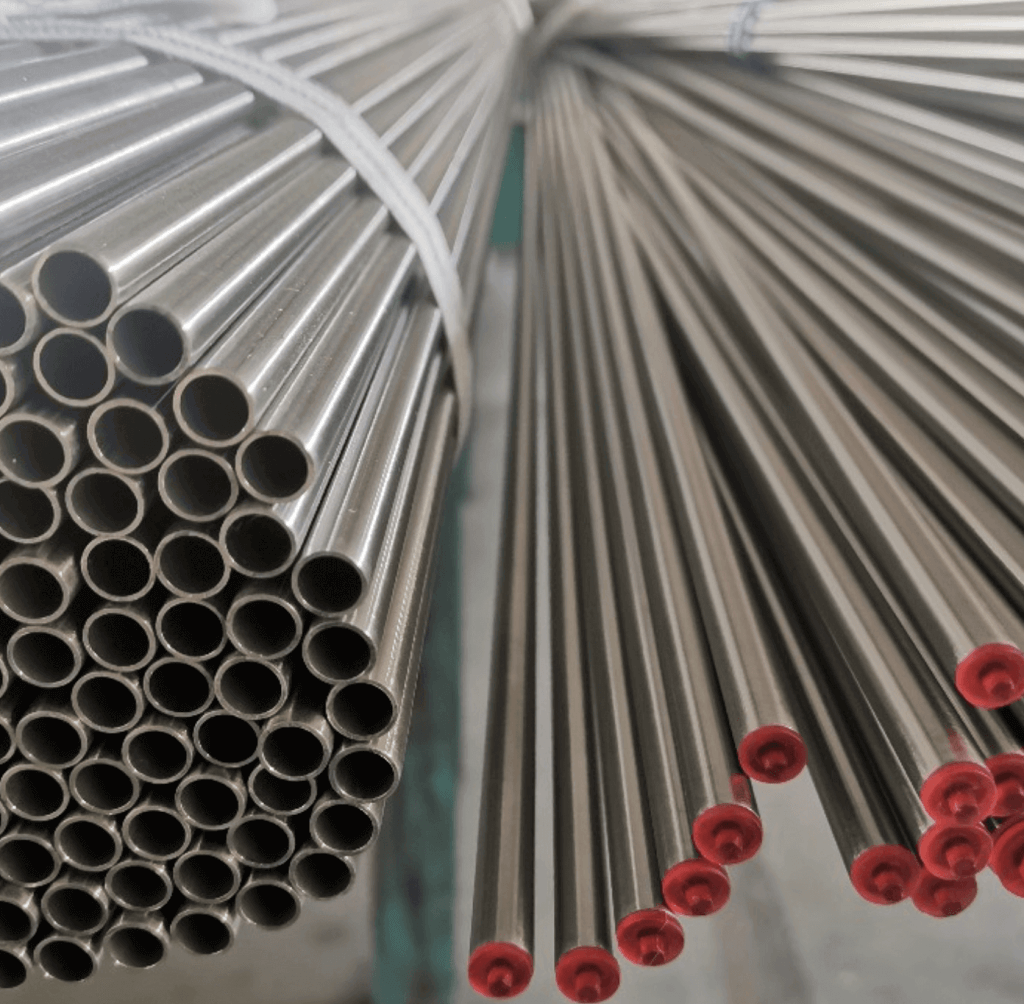
Stainless steel BA (Bright Annealed) tubes undergo a bright annealing process during annealing. Bright annealing is performed in a protective atmosphere, ensuring the stainless steel surface remains bright and free from oxidation after annealing.
2. What is Annealing and Why Bright Annealing?
- Annealing: Annealing is a heat treatment process used to remove residual stresses and work hardening from metal materials. This process makes the crystal structure of the metal uniform and soft, improving its workability and toughness.
- Oxidation: When metal is heated in the presence of atmospheric gases, the metal surface reacts with oxygen to form an oxide film.
- Bright Annealing: Bright annealing is a type of non-oxidizing annealing performed in an oxygen-free environment. This prevents the material’s surface from being exposed to oxygen and forming an oxide film.
3. How Do We Bright Anneal?
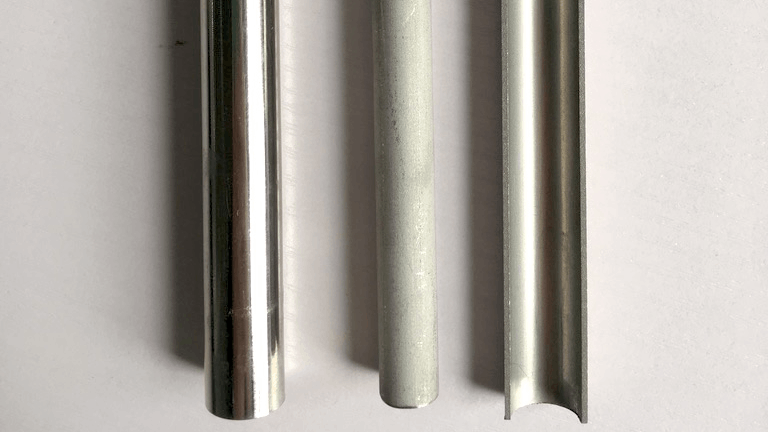
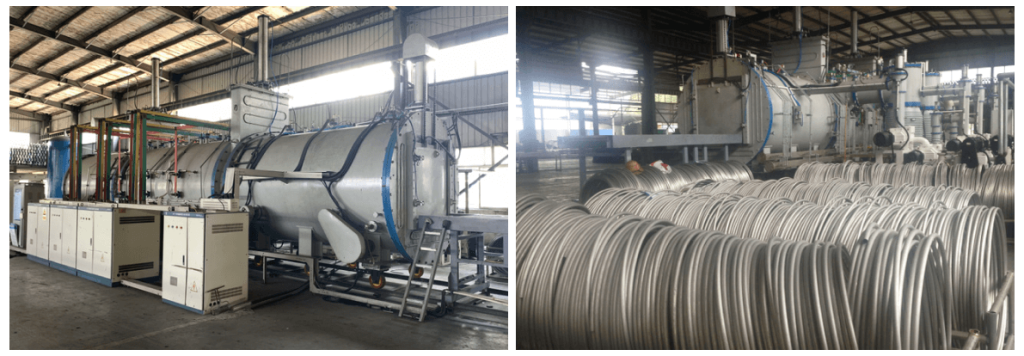
- A bright annealed finish is achieved by cold rolling the stainless steel tubing, followed by annealing in a controlled, protective atmosphere to prevent scale formation.
- The stainless steel tubing is usually bright annealed in dissociated ammonia, the furnace atmosphere providing a dry, carbon-free source of reducing gas. The typical composition of dissociated ammonia is 75% hydrogen, 25% nitrogen, less than 300 ppm residual ammonia, and less than -50°C (-60°F) dew point. Both the gas and the furnace must be dry and scrupulously clean. After bright annealing, the hardness of the tubing should be less than 90 HRB.
- This finish is not pickled in acid because a thin oxide film is formed during annealing, eliminating the need for pickling. It is used in trim appliances, surgical instruments, and cookware.
4. Should You Choose BA Tube for Your Project?
- Surface Quality: BA tubes have a smooth, glossy, mirror-like surface finish, which requires no further processing.
- Applications: They are widely used in industrial applications, such as the chemical, food, and beverage industries, as well as in architectural decoration, furniture, and kitchen equipment.
- Corrosion Resistance: If your application does not have high aesthetic requirements but needs good corrosion resistance, you can opt for AP tubes. However, if you need a smooth, easy-to-clean surface with high aesthetic requirements, BA tubes are the better choice.
- Diameter Consideration: For tubes with an outer diameter smaller than 1 inch (25.4mm), it is difficult to remove internal oxidation and surface impurities through traditional pickling. To ensure the cleanliness of the inner surface, we recommend using BA tubes.
★★★ Review of previously selected articles:
- What is Bright Annealing of Stainless Steel Tubes?
- What is the Difference Between Annealed and Bright Annealed Stainless Steel Tubes?
- AP, BA, and EP Stainless Steel Tubes: Key Differences and Application Scenarios
- What is the difference between a stainless steel pipe and a stainless steel tube?
- Common Applications of Stainless Steel Tubes
- Is Stainless Steel Tubing Good for Heat Exchangers?
- Exploring Stainless Steel Tubing: Making the Right Choice for Your Fluid System
- What is Stainless Steel Coil Tubing and Why It Matters in Modern Industry
- Choosing the Right Stuff: Corrosion-Resistant Materials
Get more information about us

Company Links
Contact Information
Ph: +86-21-62666697
Fax: +86-21-62999145
Mobi: +86 133 3793 7369
Email: link@jwgroup.cc
Add: No 2299, Xiangjiang Road, Shanghai, China