
When people think about a proper draft beer setup, the image that usually comes to mind is a large refrigerator with a keg inside. That system works well—but it’s not the only way to pour cold draft beer.
In recent years, flash beer coolers (also called flash chillers) have become increasingly popular, especially in environments where space, mobility, or installation flexibility is limited. From compact home bars to small restaurants and outdoor events, this type of cooling system is quietly gaining ground.
So what exactly is a flash beer cooler, how does it work, and when does it make more sense than a traditional kegerator?
Let’s take a closer look.

What Is a Flash Beer Cooler?
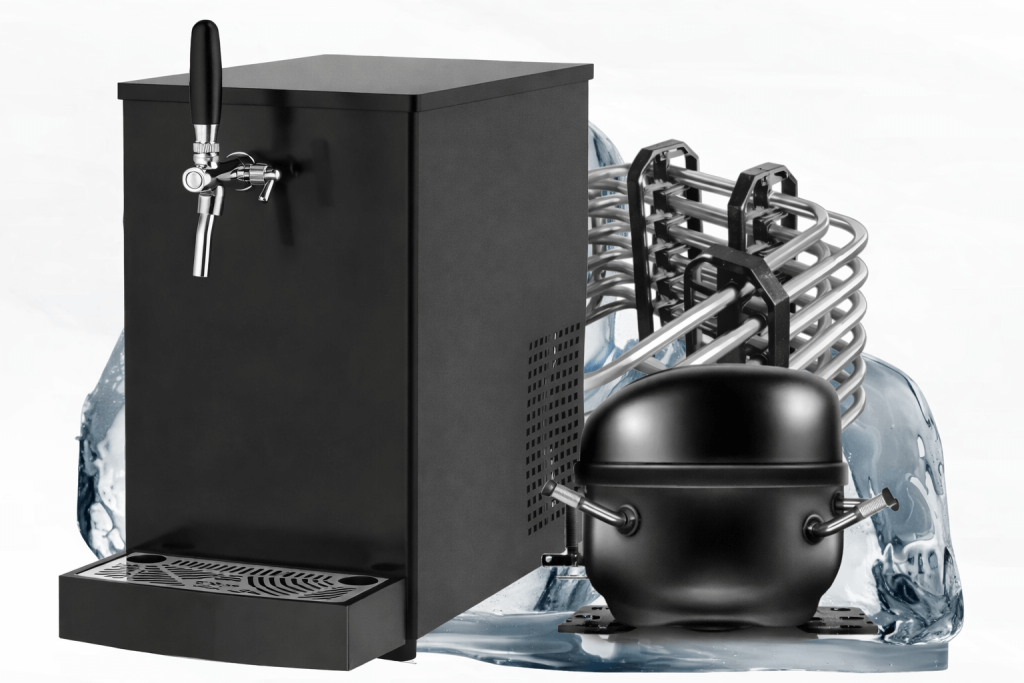
A flash beer cooler is a draft beer cooling system designed to chill beer at the moment of dispensing, rather than storing the entire keg at cold temperature.
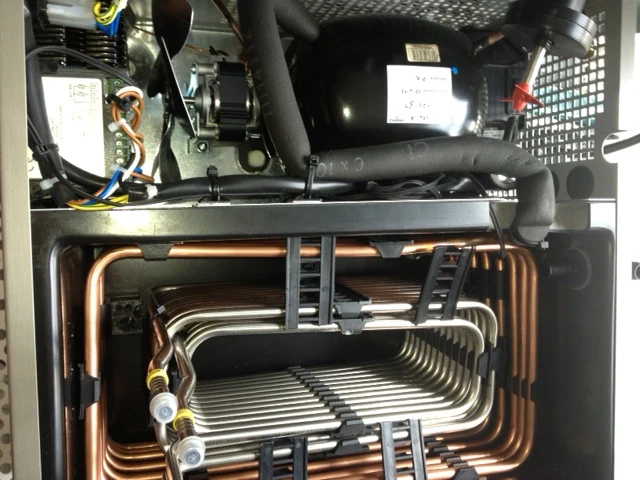
Instead of placing the keg inside a refrigerated cabinet, the beer remains at ambient temperature. When beer is poured, CO₂ pressure pushes it through a long stainless steel coil housed inside a chilled environment—typically an ice-water bath or a refrigerated coolant tank. During this short journey, the beer rapidly drops to serving temperature before reaching the tap.
This approach makes flash coolers especially suitable for:
- Home bars with limited floor space
- Bars or cafés without walk-in coolers
- Mobile bars, food trucks, and event setups
- Temporary or seasonal draft beer installations
In short: cooling only when you need it, exactly where you need it.
How Flash Cooling Works
Although designs vary slightly, the basic operating principle is straightforward:
- Beer exits the keg under CO₂ pressure
- It enters a stainless steel cooling coil, often 50–120 feet long
- The coil is fully submerged in ice water or a chilled coolant bath
- Heat is transferred from the beer to the surrounding cold medium
- Chilled beer exits the faucet, ready to serve
Because cooling happens inside the coil, the system can deliver cold beer quickly without the energy cost or space requirements of a full refrigerator.
Flash Cooler vs. Kegerator: Key Differences
| Aspect | Flash Beer Cooler | Kegerator |
|---|---|---|
| Cooling principle | Cools beer during dispensing | Keeps entire keg cold |
| Space requirement | Compact | Large |
| Mobility | High | Low |
| Energy usage | Intermittent | Continuous |
| Ideal use | Events, small bars, home setups | High-volume permanent bars |
A kegerator still makes sense for locations with continuous, high-volume service. But when flexibility and footprint matter, flash coolers often provide a better balance.
Advantages and Limitations
Benefits of Flash Beer Coolers
- Small physical footprint
- Lower energy consumption
- Lower upfront equipment cost
- Easy to relocate or transport
- Suitable for multiple beverages (beer, wine, cider, kombucha, cold brew, iced tea)
Limitations to Consider
- The keg itself is not refrigerated
- Coolant or ice needs time to reach temperature
- More tubing connections than a basic kegerator
- Noise levels depend on unit design
For many users, these trade-offs are acceptable given the flexibility gained.
Why the Cooling Coil Matters
At the center of every flash cooler is the cooling coil, and its material and length play a critical role in performance.
Longer coils provide more surface area and longer contact time, allowing beer to reach proper serving temperature even when the keg is warm.
Typical coil configurations:
| Coil Length | Typical Application |
|---|---|
| 50–70 ft | Light to medium usage |
| ~120 ft | High demand or continuous pouring |
Why Stainless Steel Is Preferred
Most modern systems rely on stainless steel coil tubing for beverage contact because it offers:
- Excellent corrosion resistance
- Neutral flavor characteristics
- High pressure tolerance
- Long service life
- Hygienic, food-grade performance
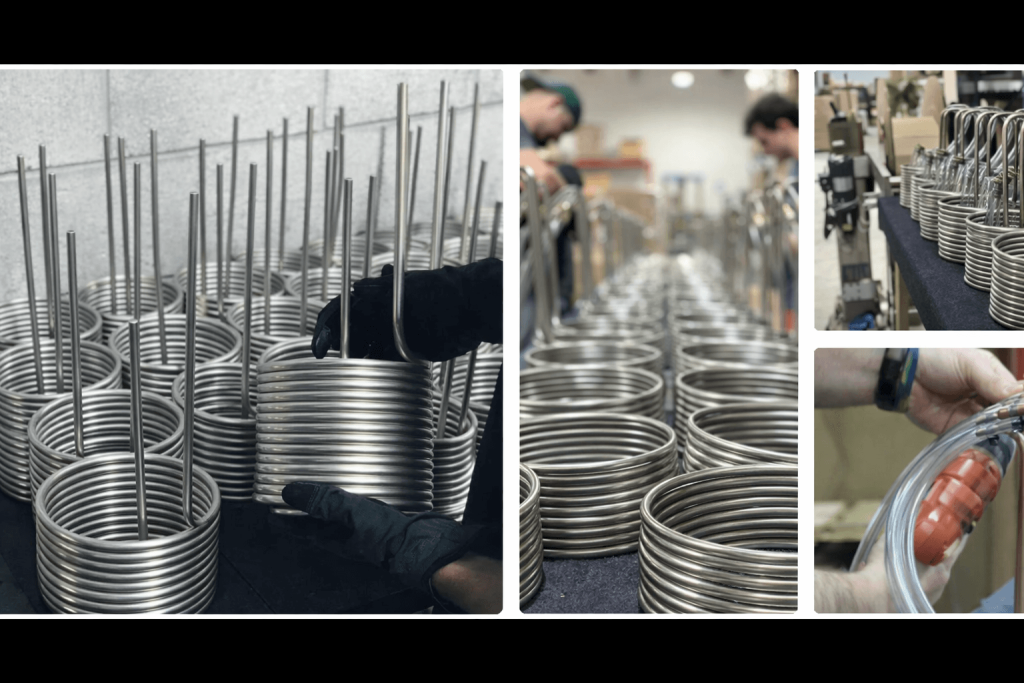
From a manufacturing and system-design perspective, stainless steel coils have become the standard for reliable, long-term draft beer cooling.
Where Flash Coolers Are Commonly Used
Flash beer coolers are widely used in situations where traditional refrigeration is impractical:
- Residential home bars
- Small bars and cafés
- Mobile beverage carts and trucks
- Festivals and outdoor events
- Temporary installations and pop-ups
- Multi-beverage tap systems
Whenever installing a glycol system or walk-in cooler isn’t feasible, flash coolers offer a practical alternative.

What to Consider When Choosing a Flash Cooler
Before selecting a unit, it’s important to evaluate:
- Number of draft lines required
- Cooling capacity (liters per hour or minute)
- Installation location (countertop vs. under-counter)
- Coil length and internal layout
- Cooling method (ice bath vs. mechanical refrigeration)
Commercial users often prioritize throughput, while home users tend to focus on size and convenience.
Closing Thoughts
Flash beer coolers are not meant to replace kegerators entirely. Instead, they fill a very specific—and increasingly important—role in the draft beer ecosystem.
They offer:
- Minimal space requirements
- Efficient, on-demand cooling
- Flexible installation options
- Reliable performance powered by stainless steel coil tubing
For anyone designing or supplying modern draft systems, understanding how flash coolers work—and why stainless steel coils matter—has become essential.
If you’re involved in beverage equipment, draft system design, or are evaluating coil materials for cooling applications, feel free to reach out. I’m always happy to exchange technical insights or discuss stainless steel tubing solutions for beverage systems.
★★★ Review of previously selected articles:
- What is Bright Annealing of Stainless Steel Tubes?
- What is the Difference Between Annealed and Bright Annealed Stainless Steel Tubes?
- AP, BA, and EP Stainless Steel Tubes: Key Differences and Application Scenarios
- What is the difference between a stainless steel pipe and a stainless steel tube?
- Common Applications of Stainless Steel Tubes
- Is Stainless Steel Tubing Good for Heat Exchangers?
- Exploring Stainless Steel Tubing: Making the Right Choice for Your Fluid System
- What is Stainless Steel Coil Tubing and Why It Matters in Modern Industry
- Choosing the Right Stuff: Corrosion-Resistant Materials
Get more information about us

Company Links
Contact Information
Ph: +86-21-62666697
Fax: +86-21-62999145
Mobi: +86 133 3793 7369
Email: link@jwgroup.cc
Add: No 2299, Xiangjiang Road, Shanghai, China