
Why It Remains a Practical Choice in Modern Fermentation Systems
In fermentation industries, cooling is often associated with two moments:
rapid cooling before fermentation begins, and refrigeration after the product is finished.
However, one of the most critical cooling challenges exists during fermentation itself.
Temperature control at this stage is not always visible, but it has a direct influence on product consistency, fermentation behavior, and overall process reliability.
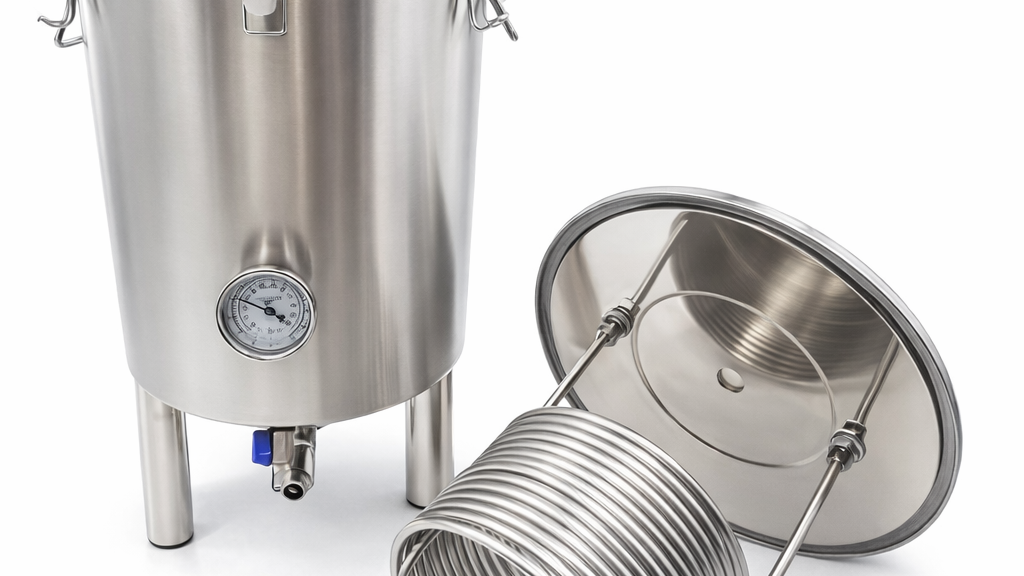
Fermentation is an active, heat-generating process
Once fermentation starts, yeast activity continuously releases heat inside the tank.
This heat buildup is gradual but persistent. If it is not removed in a controlled way, producers may encounter issues such as:
- Inconsistent flavor profiles
- Yeast stress or stalled fermentation
- Reduced batch-to-batch repeatability
- Extended production cycles
For breweries, wineries, and other fermentation-driven processes, maintaining a stable fermentation temperature is part of quality control, not simply operational convenience.
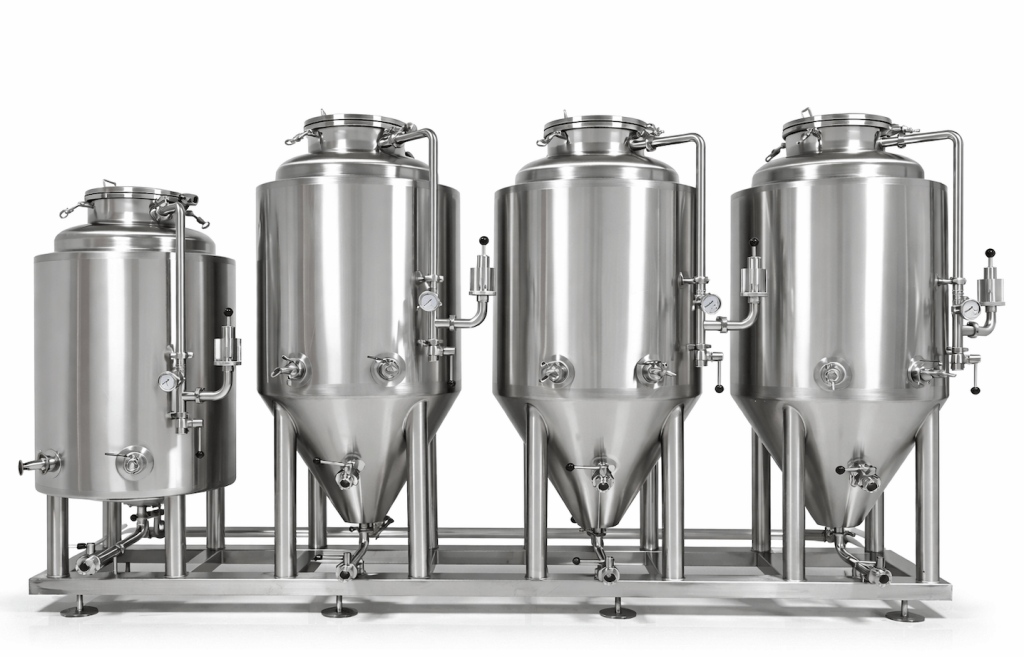
How coil-based fermentation cooling works in practice
A coil-based fermentation cooling system relies on a stainless steel cooling coil placed inside the fermenter or integrated within the tank structure.
Chilled water or glycol circulates through the coil, allowing heat to be transferred directly from the fermenting liquid into the cooling medium.
Rather than cooling the surrounding environment or relying on indirect heat removal, this method focuses on localized heat exchange, exactly where fermentation activity occurs.
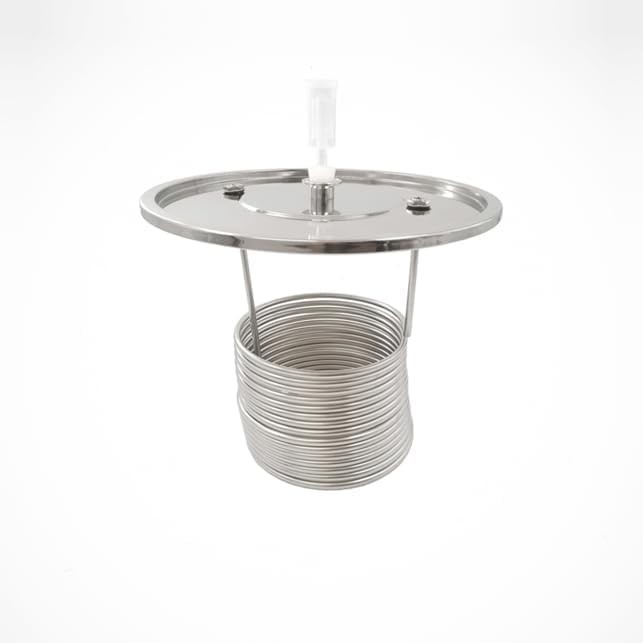
Why stainless steel coil tubing is commonly selected
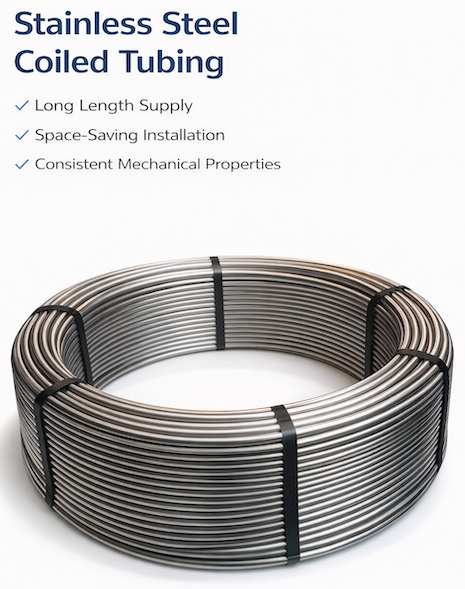
From both an application and manufacturing perspective, stainless steel coil tubing is well-suited for fermentation cooling systems.
Its advantages include:
- Resistance to acidic, alcoholic, and cleaning chemicals
- High durability under continuous circulation
- Smooth internal surfaces that support hygienic operation
- Efficient heat transfer when formed into compact coil geometries
In most cases, 304 or 316L stainless steel coil tubing is chosen based on process conditions, cleaning protocols, and cooling media requirements.
Coil cooling compared with full jacket cooling
Full cooling jackets are often used on large industrial fermenters and are effective for high-volume production.
That said, coil-based cooling continues to be widely applied in many situations, including:
- Small and medium fermentation tanks
- Modular or expandable systems
- Pilot-scale production and testing
- OEM-designed fermentation equipment
Cooling coils provide greater flexibility in layout and sizing, and they are often easier to adapt when fermenter dimensions vary or when customization is required.
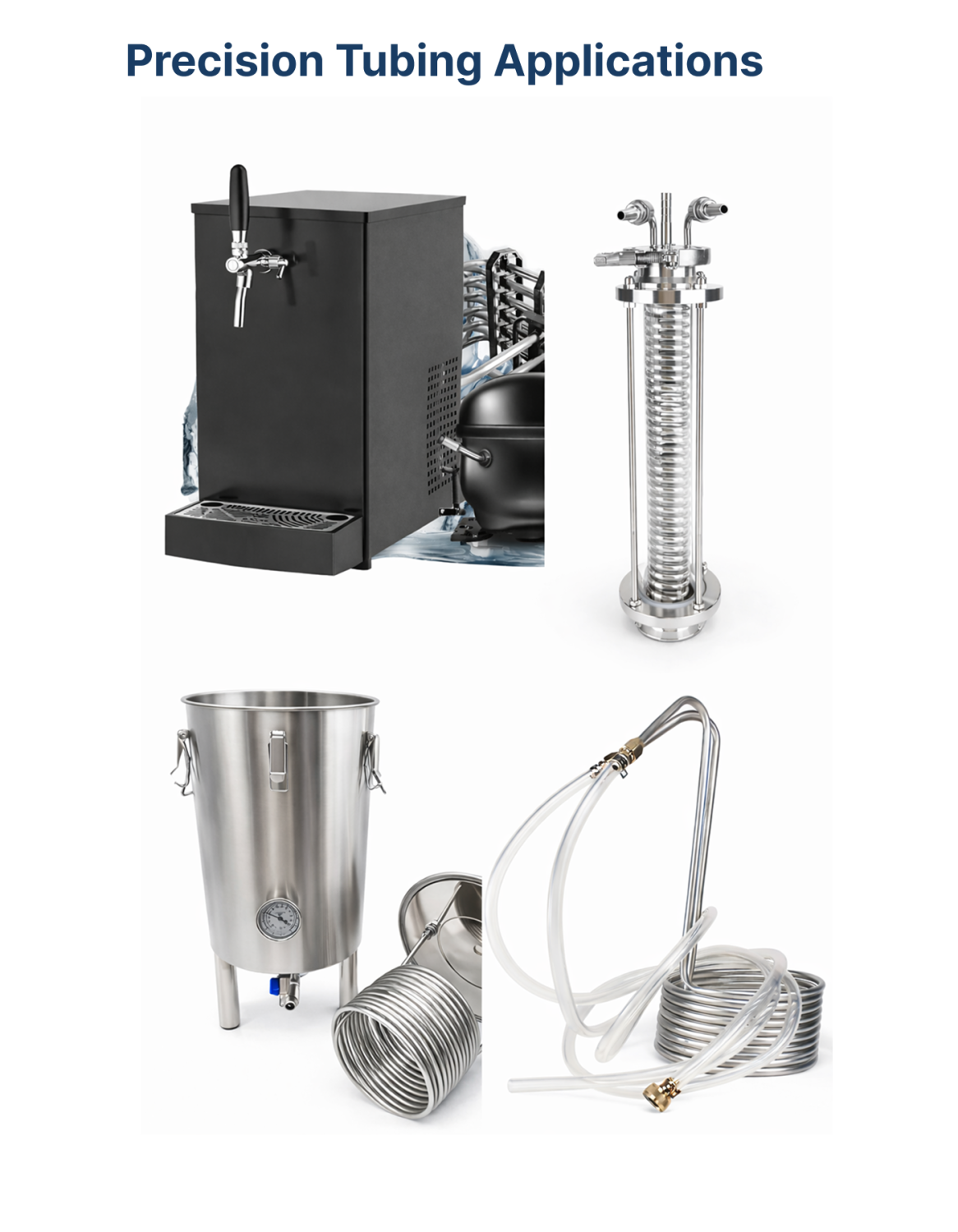
Why coil quality affects system performance
Although cooling coils may appear simple, their performance depends on several manufacturing details.
System designers and equipment builders typically focus on factors such as:
- Consistent coil geometry
- Accurate bending and spacing
- Clean internal surfaces
- Uniform wall thickness
- Compatibility with CIP processes
These characteristics directly influence heat transfer efficiency, cleaning reliability, and long-term service life — even if they are not immediately visible during installation.
Perspective from a coil tubing manufacturer
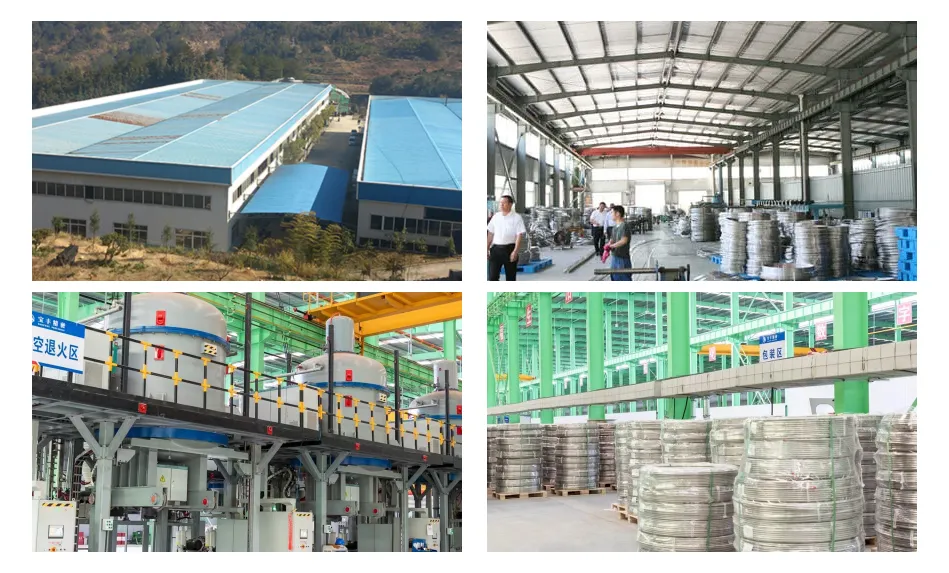
From the standpoint of a stainless steel coil tubing manufacturer, fermentation cooling highlights how tubing functions as part of an integrated system rather than as a standalone product.
When properly designed and manufactured, cooling coils operate continuously in the background, helping fermentation processes remain stable and predictable.
When problems occur, they often emerge gradually, affecting multiple batches rather than causing immediate failure.
Conclusion
Coil-based fermentation cooling is not a new concept, but it remains a relevant and effective solution across a wide range of fermentation applications.
When combined with well-manufactured stainless steel coil tubing, it offers a balance of control, efficiency, and adaptability that continues to meet real production needs.
In many cases, the most critical components are those that operate quietly, supporting the process day after day without drawing attention.
★★★ Review of previously selected articles:
- What is Bright Annealing of Stainless Steel Tubes?
- What is the Difference Between Annealed and Bright Annealed Stainless Steel Tubes?
- AP, BA, and EP Stainless Steel Tubes: Key Differences and Application Scenarios
- What is the difference between a stainless steel pipe and a stainless steel tube?
- Common Applications of Stainless Steel Tubes
- Is Stainless Steel Tubing Good for Heat Exchangers?
- Exploring Stainless Steel Tubing: Making the Right Choice for Your Fluid System
- What is Stainless Steel Coil Tubing and Why It Matters in Modern Industry
- Choosing the Right Stuff: Corrosion-Resistant Materials
Get more information about us

Company Links
Contact Information
Ph: +86-21-62666697
Fax: +86-21-62999145
Mobi: +86 133 3793 7369
Email: link@jwgroup.cc
Add: No 2299, Xiangjiang Road, Shanghai, China